

Preface
The excellence of a communication system is primarily measured by four indicators:high performance, stability, reliability, and ordering.
High performance: Extreme stress testing of message sending concurrency and message receiving concurrency.
Stability: Testing whether CPU and memory remain stable during long-term operation under high concurrency.
Reliability: Testing whether messages are lost.
Ordering: Testing whether messages are out of order.
Test Environment
All stress test results can be reproduced on your own server according to the test content and hardware specifications. WuKongIM Test Version:v2.1.2-20250120
Hardware Information
Performance Testing
Core indicator of whether a communication system is high-performance: message sending concurrency and message receiving concurrency (in simple terms: the maximum number of messages the system can process for sending and delivery per second)
Send Rate Testing
Test Content
Total Send Rate:
100 * (24000/60) = 40,000 messages/second
Test Screenshots
| Test Content | System Top Information |
|---|---|
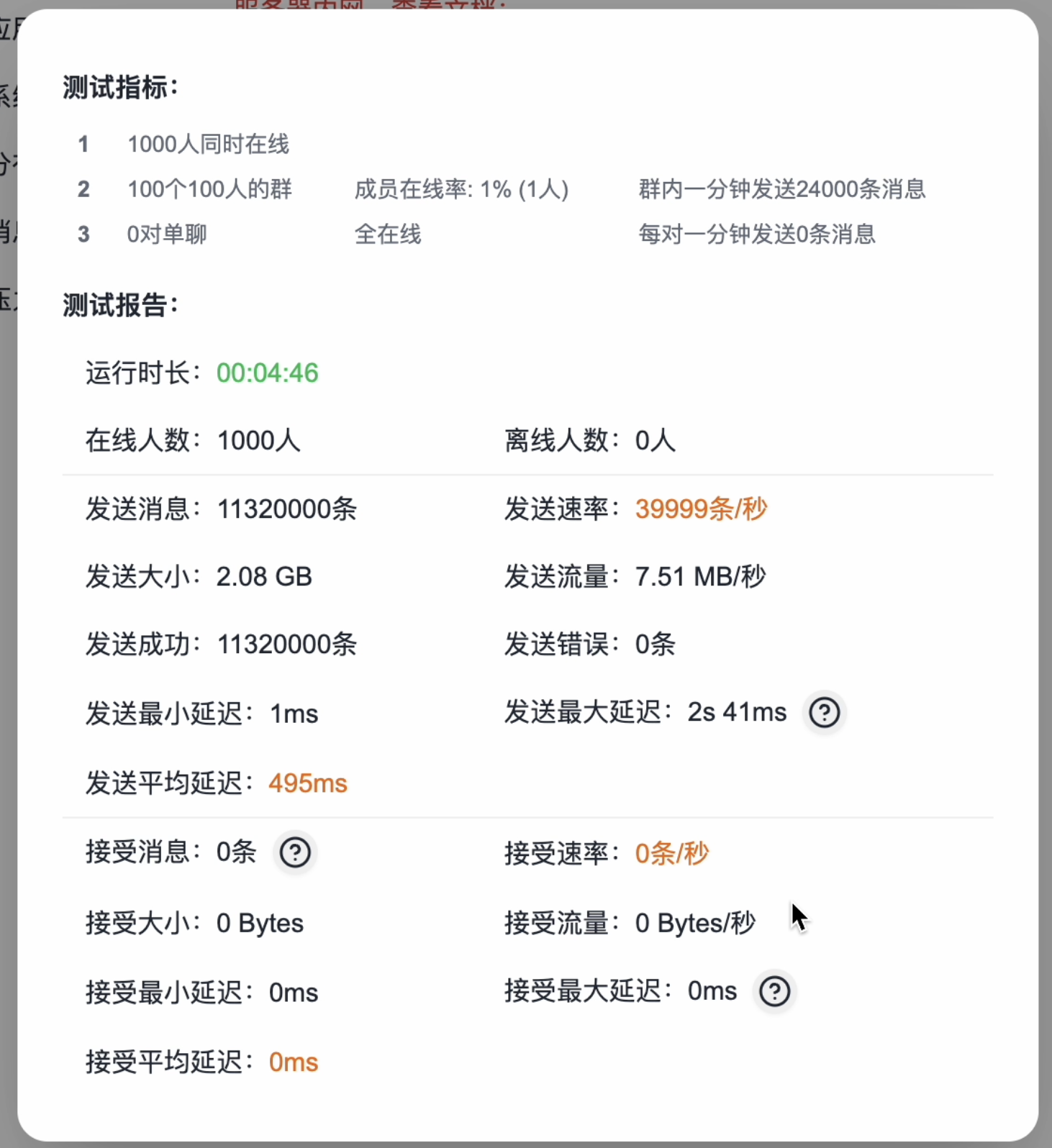 | 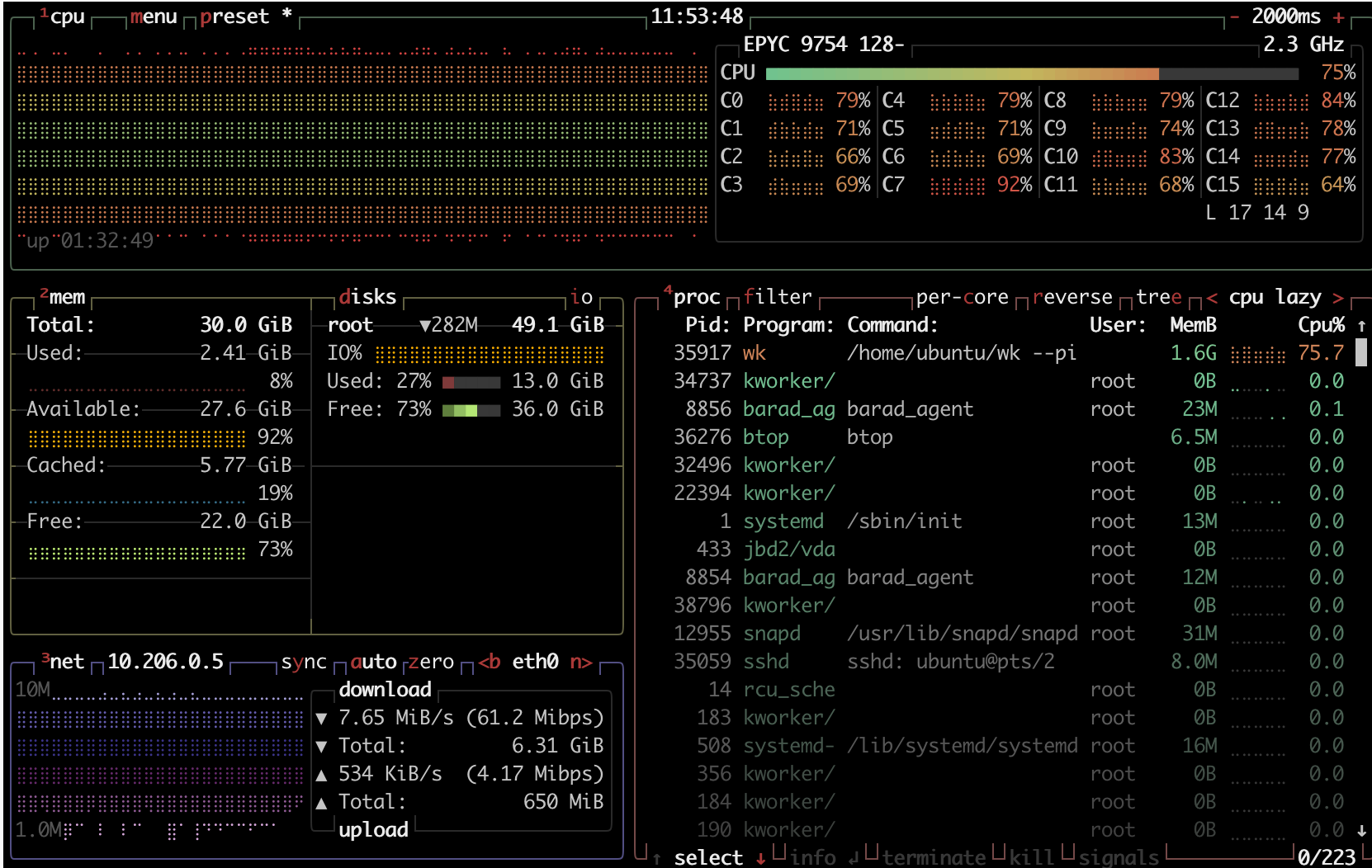 |
Summary: With sending concurrency reaching
40,000/second, the average message sending latency is still within milliseconds, memory is stable, CPU usage is within expectations. Excellent performance! 👍
(If you have no concept of 40,000/second, compared to MySQL, a 16-core server has write performance of about 3,000~8,000/second. 40,000/second is close to Redis write performance with AOF mode enabled)
Receive Rate Testing
Test Content
Total Receive Rate:
5000 * (2400/60) = 200,000 messages/second
Test Screenshots
| Test Content | System Top Information |
|---|---|
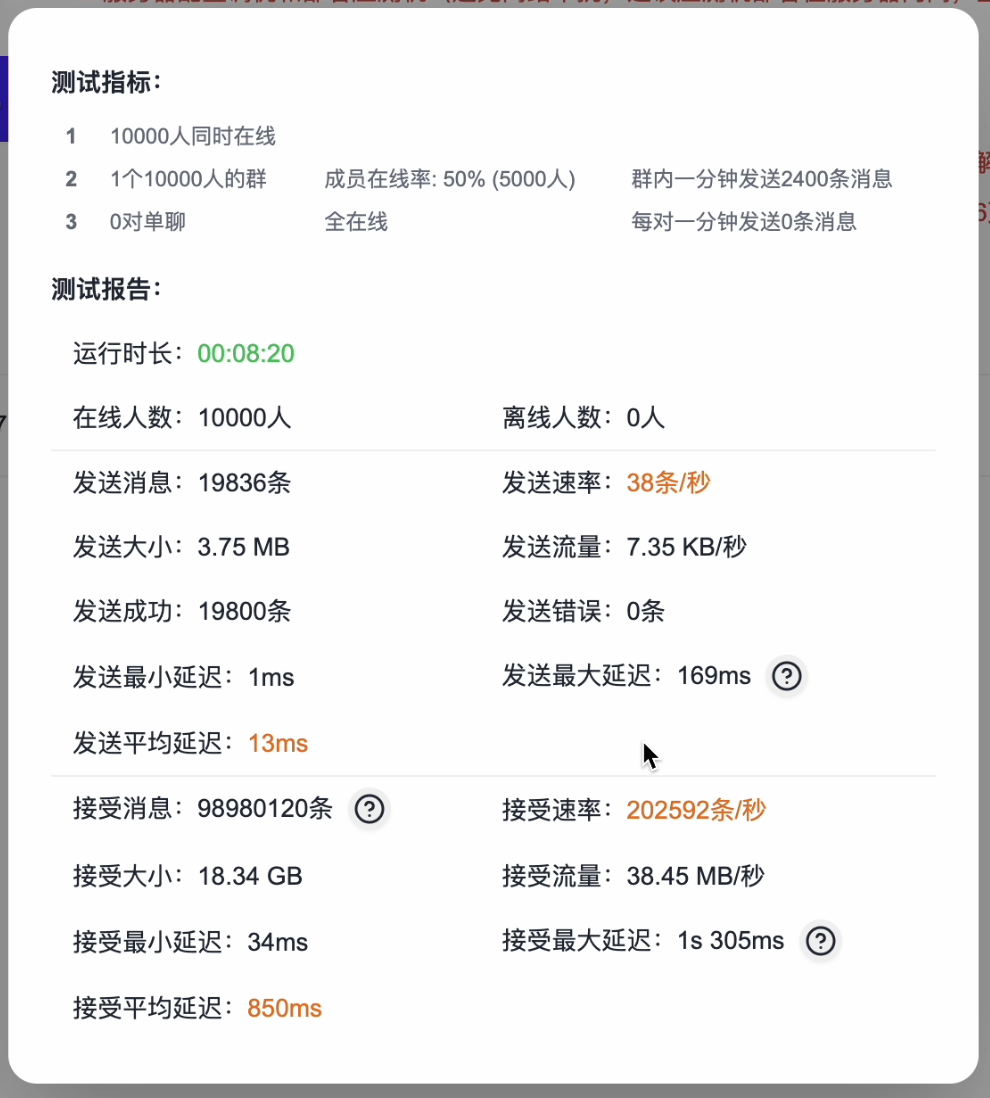 | 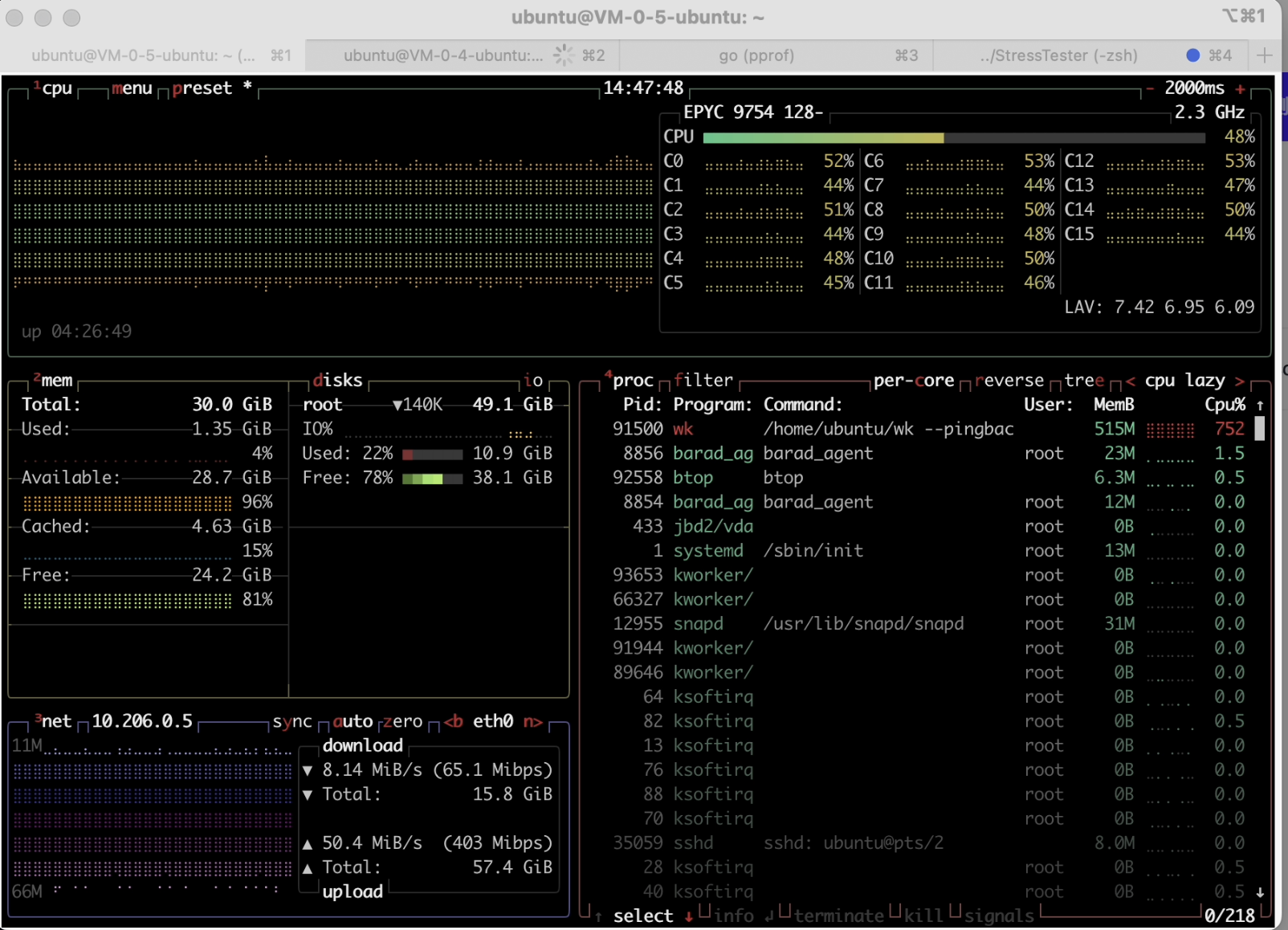 |
Summary: Under maximum server performance utilization, receiving concurrency reached
200,000/s, demonstrating very strong performance.
Mixed Testing
Test Content
Total Send Rate:
1000 * (600/60) + 100 * (1200/60) + 1 * (600/60) = 12,010 messages/second
Total Receive Rate: 1000 * (600/60) + 100 * (600/60) + 1 * 5000 * (300/60) = 36,000 messages/second
Test Screenshots
| Test Content | System Top Information |
|---|---|
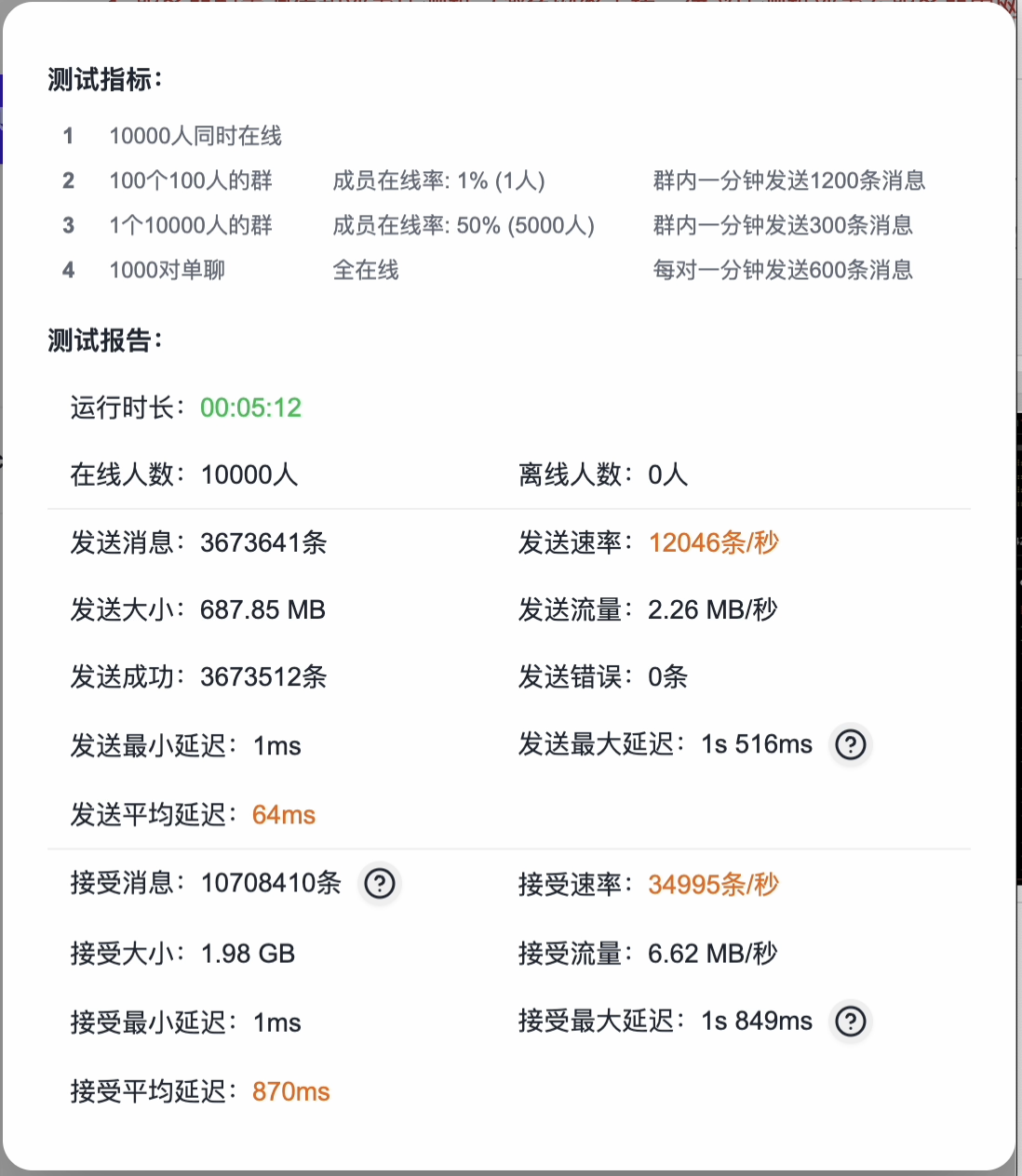 | 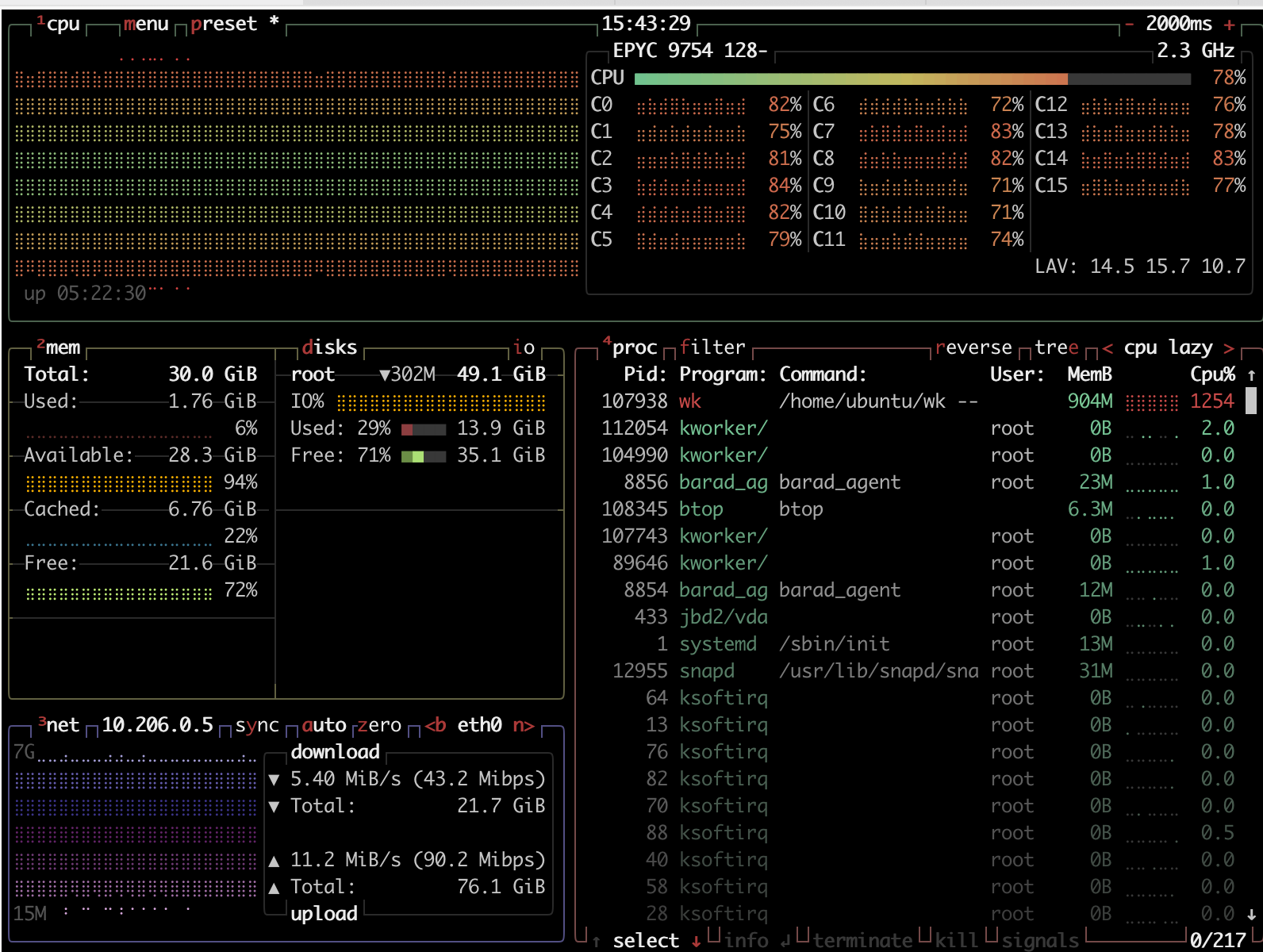 |
Summary: Under maximum server performance utilization, send and receive concurrency reached
12,000/s and 36,000/s respectively, showing excellent performance.
Stability Testing
Testing whether the system can run stably under low message latencyTest Objective
Test whether the system can run smoothly under high-frequency sending and receiving concurrency, with average message latency in ideal state (under 500ms).Test Content
20,000 people online simultaneously
Duration: 24 hours
Test Results
Result Screenshots| Test Content | System Top Information |
|---|---|
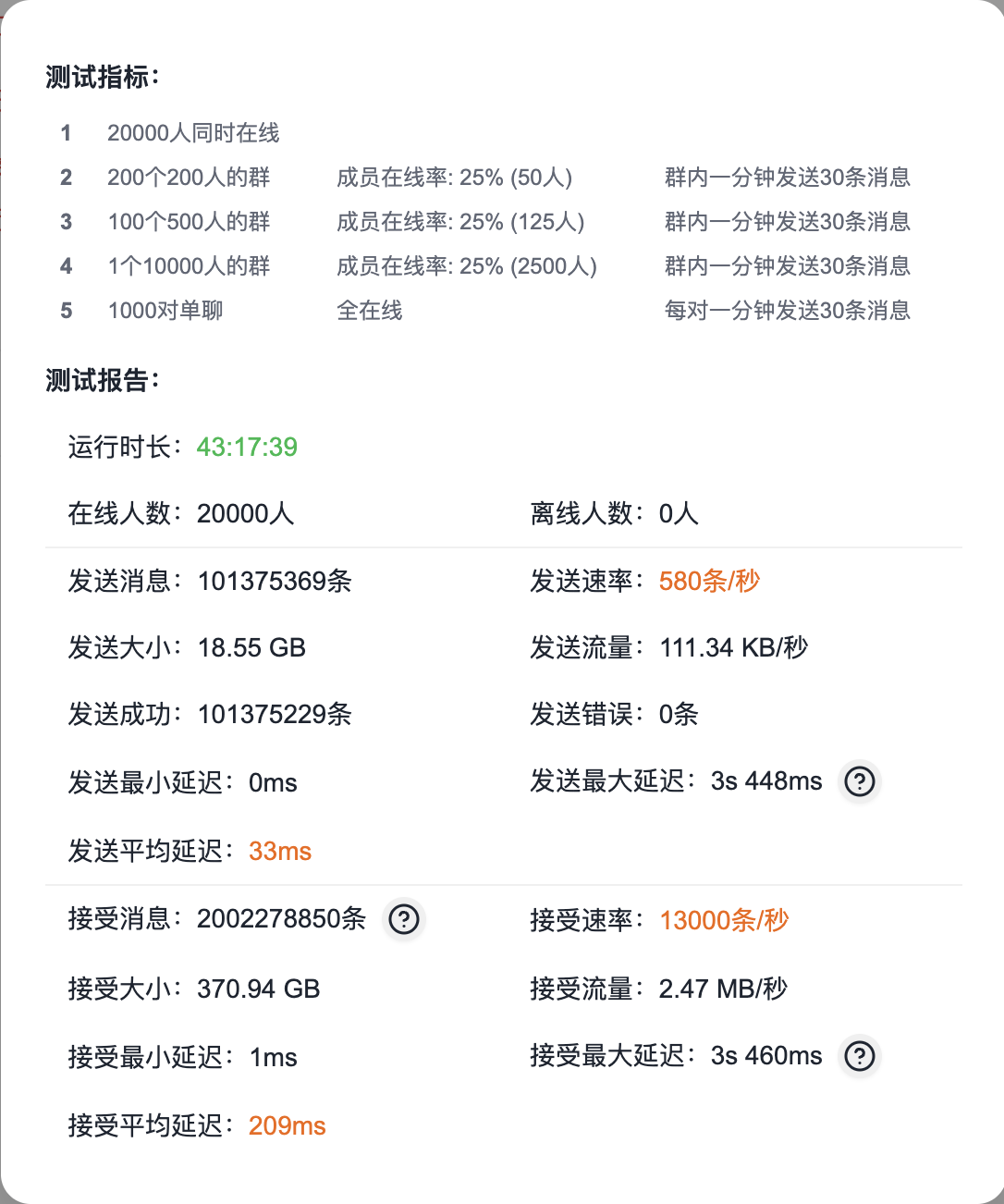 | 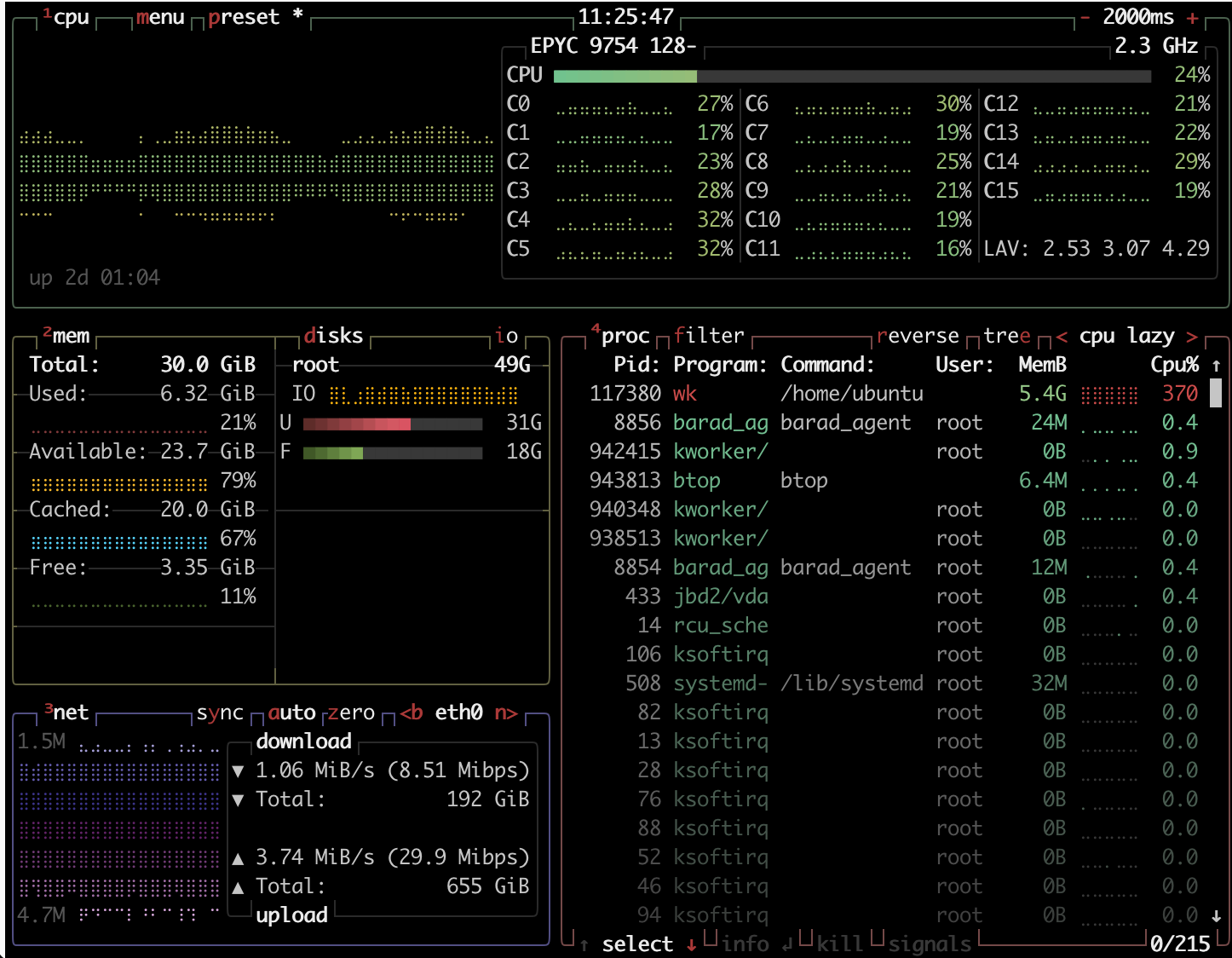 |
Summary: With a 16-core 32GB server under high-frequency messaging in numerous group chats and one-on-one chats, CPU remained stable at around 20%, memory stable at 4-5G, and average message latency remained at millisecond level. Excellent performance.
Reliability Testing
Testing whether messages are lostTest Objective
Under massive message sending and receiving, all recipients can receive all messages completely.Test Content
Duration: 24 hours
Test Results
Result Screenshots| Test Content | Expected Messages Received |
|---|---|
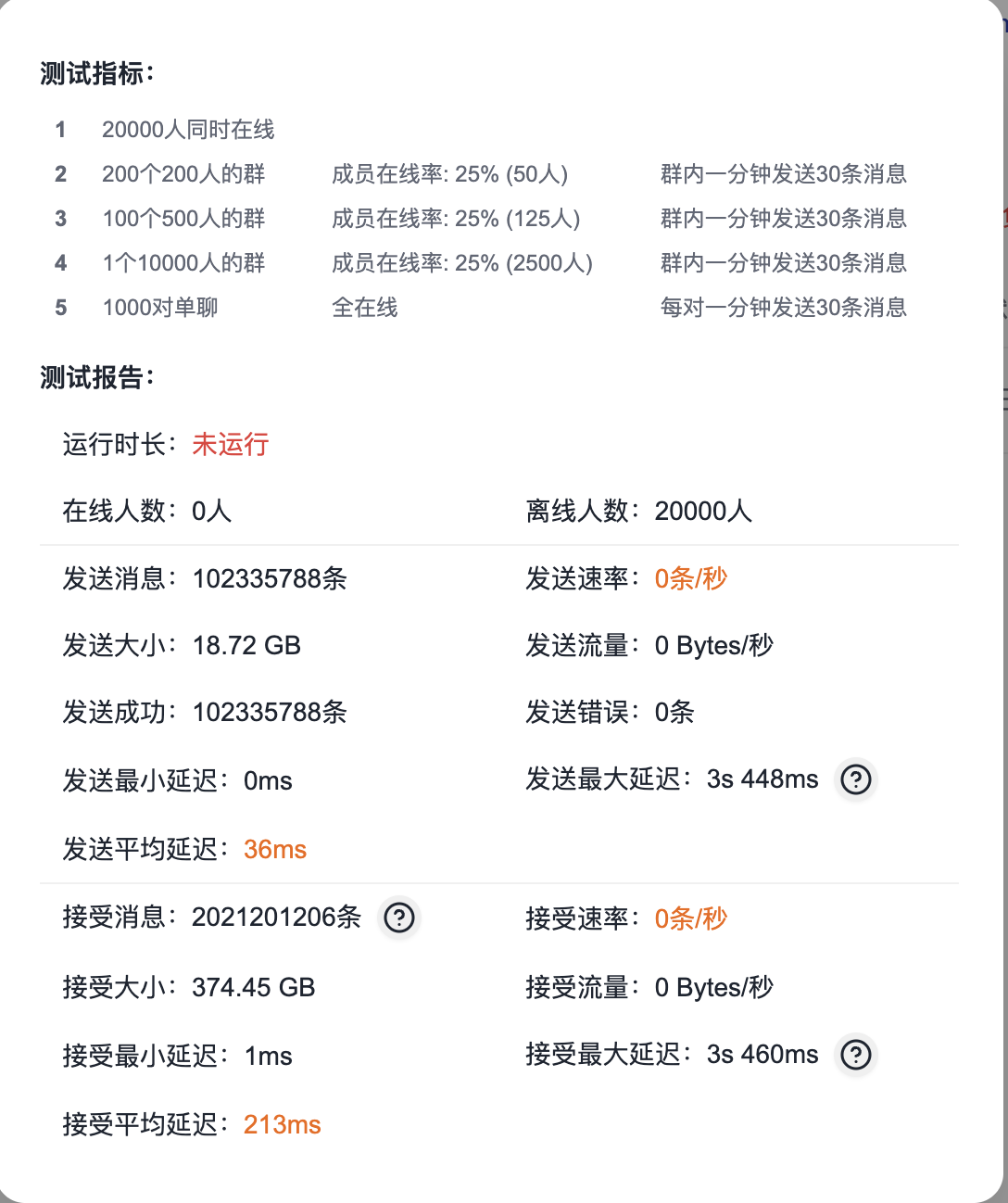 | 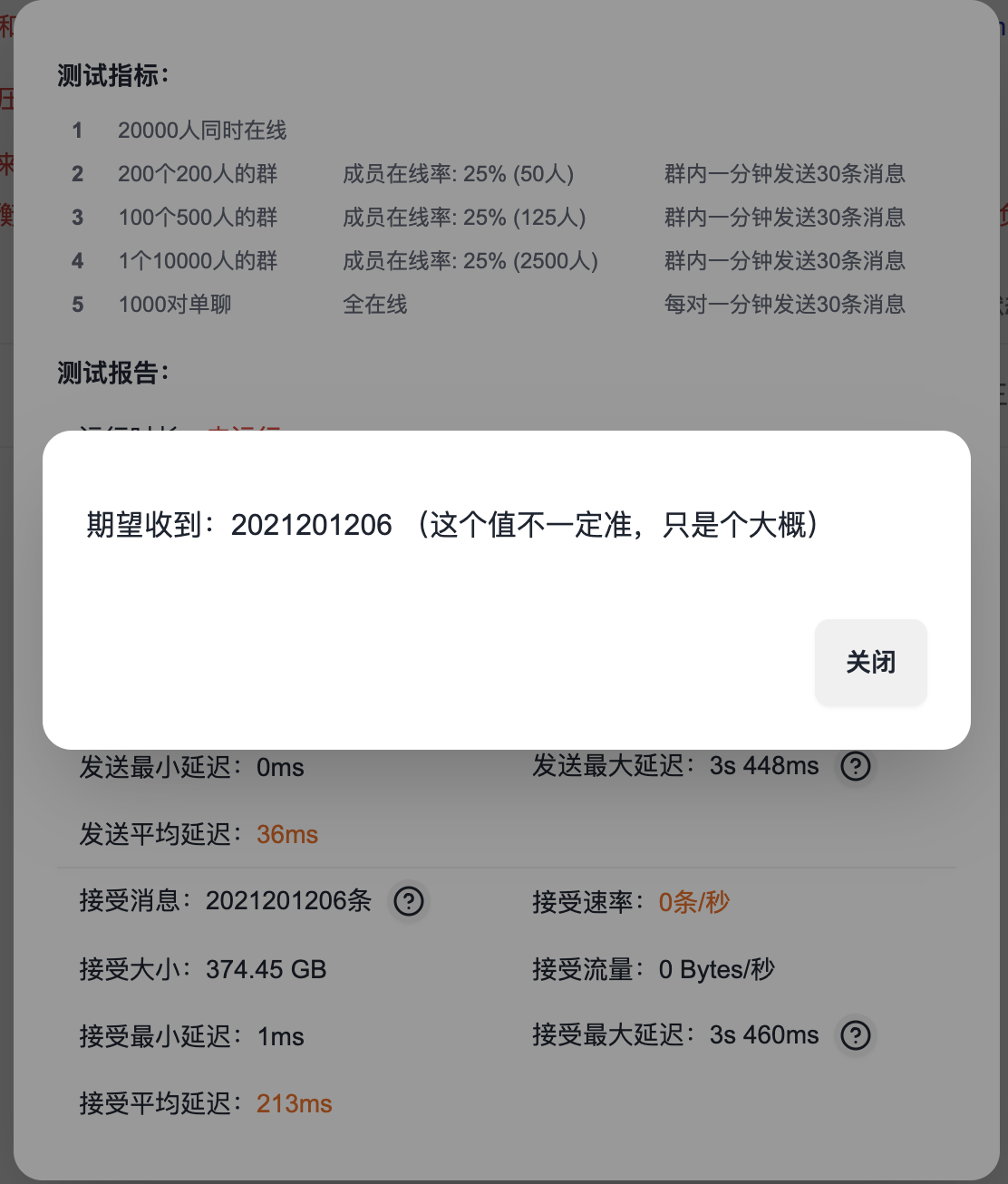 |
Summary: After massive message sending and receiving, the actual number of messages received is completely consistent with the expected number calculated by the program based on test data. That is, after sending over 100 million messages, all online recipients received them completely. This fully demonstrates the reliability of
WuKongIM.